

Coaching “It’s the drop whose ripple is felt all over the world…”
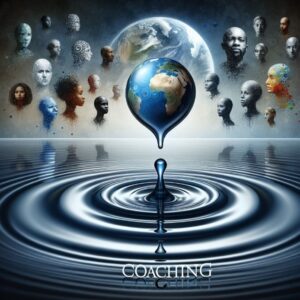
We hear the concept of coaching more and more often, and although it is clear that we are not talking about a sports coach here, it still becomes confusing, hearing this name in different contexts.
So, what is coaching?
In general, coaching is a process that takes place during a conversation, when the opportunity arises. What I mean is that not every conversation can lead to coaching, but where an idea or a keyword appears that arouses your attention and curiosity, there is also the opportunity to explore the mind of the interlocutor. You, from the position of discussion partner, become a coach, and the coachee.
Coaching is a two-way street, as this type of conversation can lead to the professional development of both people. It’s about reciprocity, about respect, trust, unconditional support and bringing nothing but the best you have to the table! What makes coaching unique is the nature of the conversation between coach and client. In other professional relationships, the beneficiary is given power or authority, but coaching facilitates an equal relationship in which both the client and the coach can give 100% for the work for the client’s benefit, being equal in power and authority and working together to reach the client’s desired destination.
In its best form, this approach changes the nature of the conversation, and the coach and coachee create a new form of openness, involvement and sincerity, and the result is fortifying and authentic.
What is not coaching?
Coaching is not therapy and it is not a form of training!
Although it has foundations in psychology, coaching does not treat the pathological area and is not a treatment. It is also not a form of training, as it does not have a defined educational topic and a structured course agenda.
Coaching is for those people who want to develop, stimulate their own thinking and find new perspectives, discover their own solutions and reach their full potential through self-reflection and constructive dialogue.
Coaching is… Well, different things for different people.
It can, among other things, strengthen us, take risks, boost our careers, clarify and achieve our goals, overcome certain blockages or stereotypes, improve or enrich our relationships — both personal and professional.
As specialists say, “Coaching helps us to catch what we need, deflect what is useless and totally ignore what is irrelevant” and this is true not only on a personal level, but also in the corporate world. “Coaching creates a context for decision-making in an organization where efficiency is the goal”
Therefore, the concept of coaching can be applied both personally and professionally; It is a mindset and a set of skills that you gain and practice, producing change.
Types of coaching
There are several types of coaching (life coaching, executive coaching, team coaching, career coaching), but, from my point of view, the coaching with the greatest impact for the client is transformational coaching, because it helps the client reflect, focuses on self-reflection, taking things step by step, layer by layer, and discovering in depth the client’s thoughts, giving clarity to beliefs, values and everything that really motivates him. It helps customers/employees achieve long-term, not immediate, goals and objectives, and this ultimately contributes to their personal and professional development.
As leaders, it is important to help employees grow, and we can do this by making coachees think for themselves and helping them reflect, think, and discover new ways to approach topics, not giving them the solution, not responding to their immediate needs, but preparing them for future challenges and ultimately helping them in their own development.
Transformational Coaching
What I like most about transformational coaching is that we focus on what is positive and possible, using the perspective of the future, looking at what can be done better in the future, and guiding people towards action and progress. Positive psychology is about creating a positive mindset and positive impact. It helps to discover all that is good in a person, and people like it when good things happen to them, they feel good when they do good deeds, that’s why the job of coach is loved, because we like to help others and do good deeds; helping people express gratitude, reinforce positive sentences, positive relationships, set goals with optimism, and maintain physical and mental well-being.
Transformational coaching is about creating sustainable, positive CHANGE. And for this, using positive psychology, in a reflective state, we help the client to discover new perspectives, a new change.
People tend to pay attention to negative things, they have a negative bias, which is a defense mechanism they have, so in transformational coaching observing and noting the negative bias during the conversation is crucial, and exiting the conversation will help the coach to frame correctly (what is half full and half empty, win frame vs loss frame) and if it is in the negative frame, The coach must be able to bring about the change in the client’s mind towards what is positive and possible using magical questions.
The way the conversation goes influences the outcome, and knowing that for people positive experiences come out of the brain faster than negative ones, we need to help the client learn how to focus more on positive experiences, to learn to accept the good!
Remember something you care about: image/feeling/person/experience and stay with it, absorb it, enrich it, let it last, give it time – be happy when you think about it!
If you take care of the minutes, the years will take care of themselves. What is the most important minute of your life? Next! Will we take the GOOD out of him?
I truly believe that transformational coaching using positive psychology helps people become better by focusing on:
- Strengths instead of weaknesses
- Optimism
- Sustainable change
- Meaning and purpose
- Positive relationships and well-being
By focusing on strengths, well-being, resilience, relationships, meaning, and optimism in transformational coaching, we, as coaches, offer a unique and holistic path to transformation.
This approach not only helps people achieve their goals, but also develops a deeper sense of fulfillment and joy, making the journey of transformation an eye-opening experience, through personal and professional development.
Coaching is an energetic profession that seems to release energy in others as a byproduct of work, the coach helps the client draw extraordinary maps and build the necessary bridges to bring their vision to life!
Daniela Alexandru😊
🔗 Link către profilul LinkedIn


